View cart “Painting, Oil on Canvas, 80cmx80cm, Modern Impressionism, “Snow in Oslo” by Irina Sanina” has been added to your cart.
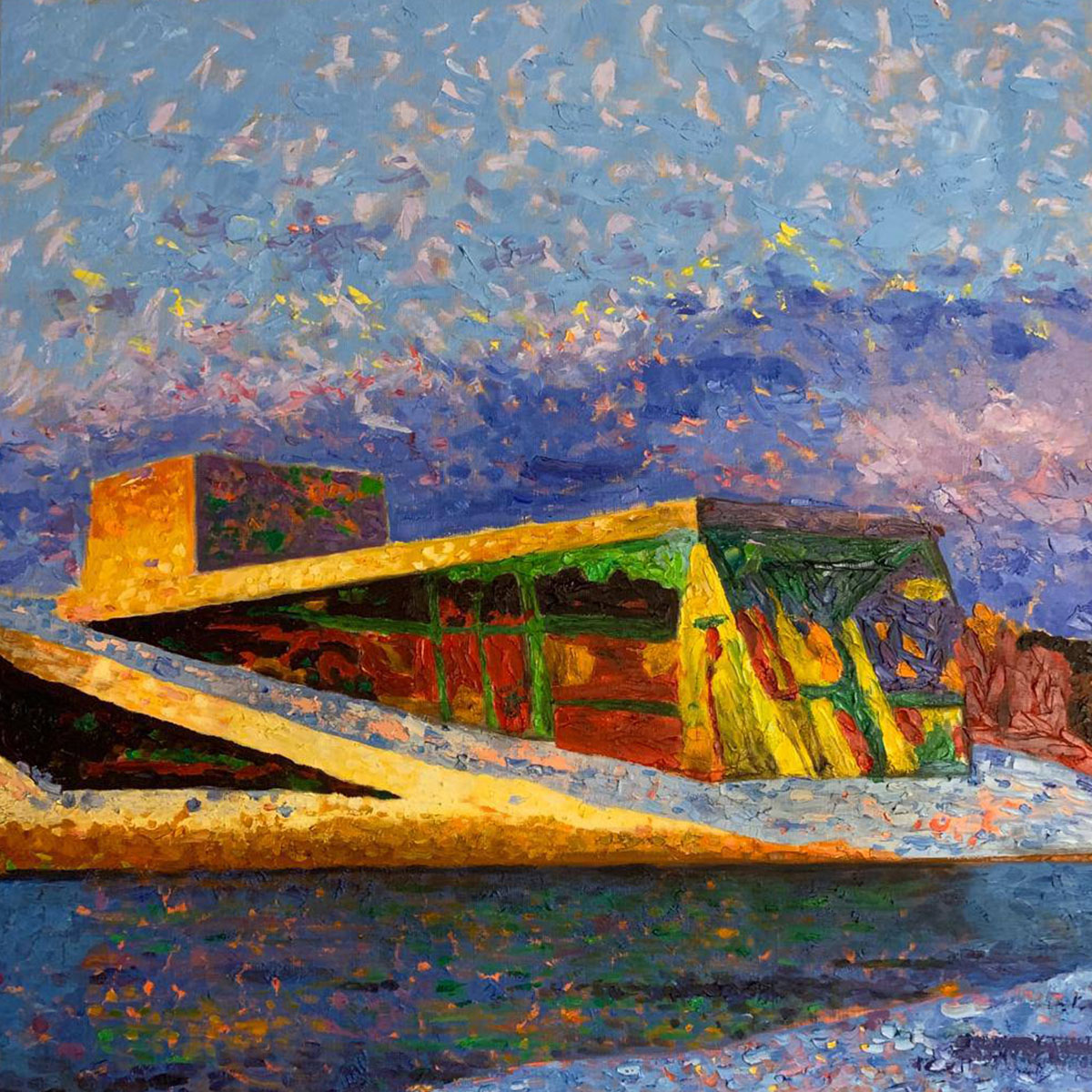
Painting, 80cm x 80cm, Oil on Canvass, Modern Impressionism “Sunset at Oslo Opera” by Elena Krikunova
$58,000.00
The Oslo Opera House, a modern marble temple of music, stands as a paragon of resolute modernity, defying convention with its distinct design. Serving as a powerful statement of Norway’s cultural prowess, the opera house symbolizes the country’s character through architecture and music. Its architects, Snøhetta, are renowned for their awe-inspiring Bibliotheca Alexandrina on the Mediterranean shores, resembling a colossal, semi-submerged sun.
Oil on Canvass Painting, 80cm x 80cm, Modern Impressionist Art “Sunset at Oslo Opera”
By Elena Krikunova & Ajay Goyal
The Oslo Opera House, a modern marble temple of music, stands as a paragon of resolute modernity, defying convention with its distinct design. Serving as a powerful statement of Norway’s cultural prowess, the opera house symbolizes the country’s character through architecture and music. Its architects, Snøhetta, are renowned for their awe-inspiring Bibliotheca Alexandrina on the Mediterranean shores, resembling a colossal, semi-submerged sun.
One of the opera house’s most prominent features is its roof, commanding attention alongside the aluminum-clad fly tower. When viewed from the waterfront, the roof becomes the defining aspect of the structure. Comprising 36,000 individually cut slabs of Carrara marble, this undulating expanse descends from the heights of the fly tower, enfolding the auditorium before submerging deliberately beneath the water’s surface. During winter, the marble roof turns treacherous with snow and ice, akin to an icy glacier in the Norwegian mountains. When the sun breaks through the often overcast Oslo skies, the building basks in its warm embrace.
Merely observing the building is not enough; one can engage with it, which is an irresistible and enjoyable experience. Functioning as a “social democratic monument,” as described by its creators, the opera house skillfully captures the essence of Norway’s snow-covered mountains and icebergs, showcased by its white marble exterior and transparent glass façade. Climbing it, sitting on its exterior roof, which is accessible to the public, is like visiting the natural wonders of Norway. It is a monument that itself seems to be marveling at the Oslo fjord just as thousands of visitors stand captivated by it. Appropriately, each year a music concert is held at a floating stage on the fjord when audiences stand on the Opera roof. The building then comes alive with throngs of humanity on its roof and exterior, reveling in the music on the water. In that moment it becomes a modern-day Coliseum of democracy through music.
In icy conditions, the opera house adopts the appearance of a man-made iceberg, its firm anchorage safeguarded by a robust sea barrier, designed to endure at least three centuries.
The Oslo Opera House defies convention with its daring and innovative architectural approach, which is distinct from traditional opera houses. Its iconic roof, adorned with 36,000 individually cut Carrara marble slabs, stands as the building’s dominant and recognizable feature, descending gracefully from the fly tower and ending underwater.
A publicly-funded building, it stands embodying the ethos of a “social democratic monument,” and invites the public to freely explore and engage with its premises, regardless of their interest in the arts.
Fusing Nature and Architecture the white marble and glass exterior mirror Norway’s snow-covered mountains and icebergs, seamlessly blending architecture with nature.
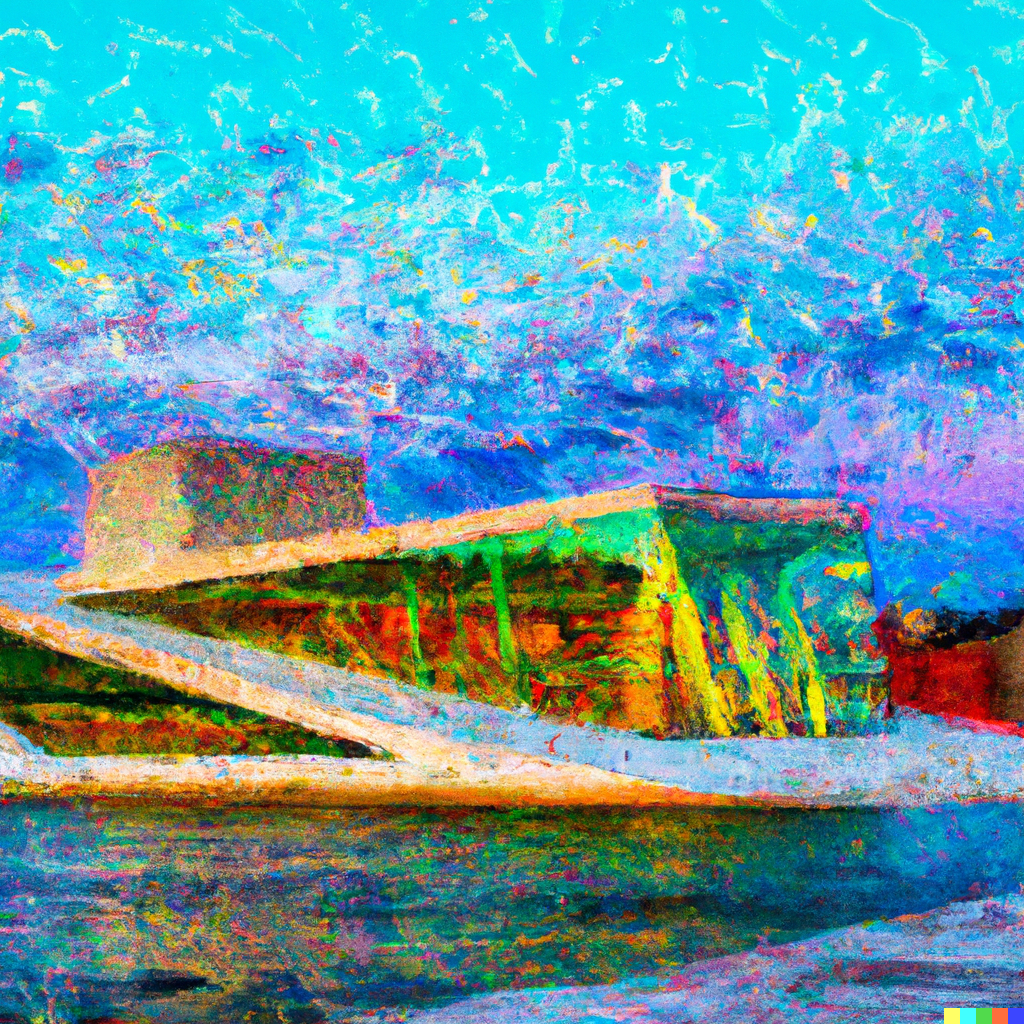
Elena Krikunova painted the digital creation by Ajay Goyal over a period of 6 months.
Ajay Goyal observed the construction of the Opera during his many visits to Oslo. The building was completed in 2008 and has become an iconic architectural achievement. Over the years Goyal spent hours captivated by the changing moods of the building in capricious Oslo weathers. On rare evenings with a low-hanging western cloud, Oslo basks in a rainbow of colors at sunset. It is that moment he tried to capture in his AI creation.
This is what Elena Krikunova says about the creation:
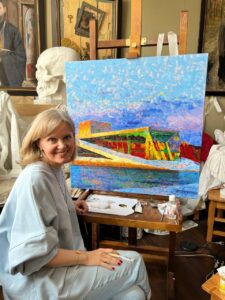
Elena Krikunova painting Oslo Opera in Sunset
“Several years ago, I had seen pictures of Oslo Opera, and although I liked the building, I cannot say it left a permanent impression on me. I have never been to Oslo, but then, in my artistic journey, I made copies of paintings by great masters. It is fascinating to transport oneself in the shoes of a great master to another time, another place, and see a world we have not seen. When Ajay showed me his digital creation using AI, I was enchanted. The image captivated me. I studied the combination of color spots created by artificial intelligence and their transitions from one color scheme to another. To me, the building I had never seen appeared to be a timeless gem, with a lot of facets, making it possible to see a lot of iridescent colors. It is like a treasure shining in the rays of the setting sun.
On the one hand, the combination of so many colors and shades seems unrealistic, and on the other hand, remembering that nature is the biggest magician and illusionist, you understand that it is at sunset that this illusion of a combination of colors and a feeling of unreality is created. While working on this picture, I involuntarily remembered how, as a child, I loved to look into a kaleidoscope, watching with interest how some color combinations and patterns pass into others, and an unusually beautiful world is born. So it is here – the theater seemed to have arisen from the kaleidoscope of my childhood, shimmering with all sorts of colors and shades. You feel like a magician, creating an unreal, on the one hand, but such a beautiful world on the basis of a really existing beautiful opera house in Oslo. In this work created by AI, I wanted to show all the beauty and energy of life, not only with color but also with strokes, highlighting the beauty of the painting and the energy that I put into it.”